- English
- Español
- Português
- русский
- Français
- 日本語
- Deutsch
- tiếng Việt
- Italiano
- Nederlands
- ภาษาไทย
- Polski
- 한국어
- Svenska
- magyar
- Malay
- বাংলা ভাষার
- Dansk
- Suomi
- हिन्दी
- Pilipino
- Türkçe
- Gaeilge
- العربية
- Indonesia
- Norsk
- تمل
- český
- ελληνικά
- український
- Javanese
- فارسی
- தமிழ்
- తెలుగు
- नेपाली
- Burmese
- български
- ລາວ
- Latine
- Қазақша
- Euskal
- Azərbaycan
- Slovenský jazyk
- Македонски
- Lietuvos
- Eesti Keel
- Română
- Slovenski
- मराठी
- Srpski језик

How Does an Electrical Interlock Pass Box Improve Material Transfer Control?
2025-12-26
Abstract
An Electrical Interlock Pass Box is a critical auxiliary device used in controlled environments to ensure safe, contamination-free transfer of materials between areas with different cleanliness grades. This article provides a comprehensive analysis of how Electrical Interlock Pass Boxes function, why they are increasingly adopted across pharmaceutical, laboratory, and electronics industries, and how their technical configurations align with international cleanroom standards. The discussion emphasizes operational logic, parameter design, and future-oriented development without relying on promotional language, ensuring clarity and credibility for professional readers.
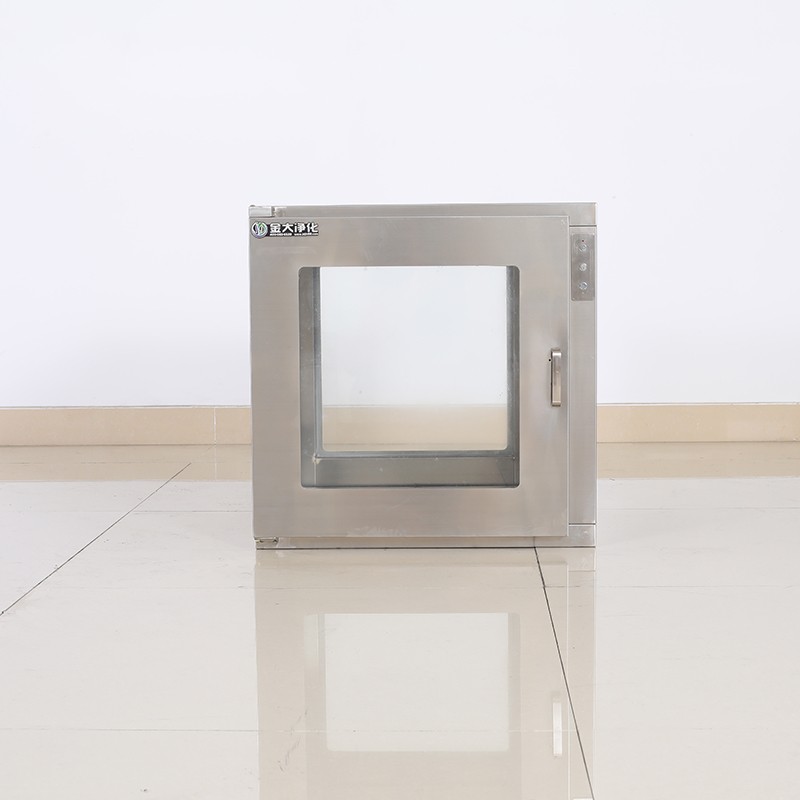
Table of Contents
- How Does an Electrical Interlock Pass Box Work in Controlled Environments?
- How Are Product Parameters Defined for an Electrical Interlock Pass Box?
- How Do Electrical Interlock Pass Boxes Address Common Operational Questions?
- How Will Electrical Interlock Pass Boxes Evolve in Future Applications?
How Does an Electrical Interlock Pass Box Work in Controlled Environments?
An Electrical Interlock Pass Box is designed to regulate material transfer between two physically separated spaces, typically with differing air cleanliness levels. The core working principle lies in its electrically controlled interlocking mechanism, which prevents both doors from opening simultaneously. This mechanism minimizes cross-contamination risks by enforcing a sequential access protocol.
In cleanrooms and controlled laboratories, airflow stability and particulate control are essential. The Electrical Interlock Pass Box operates as a buffer zone, allowing materials to be placed inside the chamber, sealed, and then retrieved from the opposite side only after the first door is securely closed. Electrical sensors, control relays, and logic controllers ensure that the interlock condition is maintained at all times during operation.
From an operational standpoint, the system supports standardized workflows. Personnel interaction is simplified through indicator lights or control panels that display door status, lock conditions, and fault alerts. This structured interaction reduces human error and supports compliance with Good Manufacturing Practice (GMP) and ISO cleanroom standards.
Unlike mechanical interlock designs, electrical interlock systems offer greater flexibility. Integration with access control systems, alarms, or building management systems enables centralized monitoring. This adaptability makes Electrical Interlock Pass Boxes suitable for facilities with evolving regulatory and operational requirements.
How Are Product Parameters Defined for an Electrical Interlock Pass Box?
The performance and suitability of an Electrical Interlock Pass Box are largely determined by its technical parameters. These parameters are established to ensure structural integrity, operational reliability, and compatibility with cleanroom environments. Material selection, dimensional accuracy, and electrical configuration are critical considerations during design and manufacturing.
Below is a consolidated overview of commonly referenced parameters used to evaluate an Electrical Interlock Pass Box. The values may vary depending on application scenarios and customization requirements, but they reflect industry-accepted benchmarks.
| Parameter | Specification Range | Technical Significance |
|---|---|---|
| External Material | 304/316 Stainless Steel or Powder-Coated Steel | Ensures corrosion resistance and ease of cleaning |
| Internal Chamber Size | Customized (Standard: 600×600×600 mm) | Determines material handling capacity |
| Interlock Type | Electrical Interlock with PLC or Relay Control | Prevents simultaneous door opening |
| Power Supply | AC 220V / 50Hz or Customized | Supports stable electrical operation |
| Door Configuration | Single Door / Double Door | Adapts to cleanroom layout |
| Surface Finish | Mirror / Matte Finish | Reduces particle adhesion |
Each parameter contributes to the overall system reliability. Electrical interlock logic, in particular, must be tested for fail-safe behavior to ensure that power interruptions or component faults do not compromise contamination control.
How Do Electrical Interlock Pass Boxes Address Common Operational Questions?
Understanding frequently raised questions helps clarify how Electrical Interlock Pass Boxes are used in real-world scenarios. The following questions and answers address practical, technical, and compliance-related concerns.
Q: How does an Electrical Interlock Pass Box differ from a mechanical interlock system?
A: An Electrical Interlock Pass Box uses sensors, control circuits, and relays or PLCs to manage door locking logic. This approach allows for advanced monitoring, alarm integration, and programmable sequences, whereas mechanical systems rely solely on physical linkages with limited flexibility.
Q: How is contamination risk reduced during material transfer?
A: Contamination risk is reduced by enforcing a strict one-door-at-a-time opening rule. The sealed chamber acts as a transitional buffer, preventing direct airflow exchange between cleanroom zones and maintaining pressure differentials.
Q: How often should an Electrical Interlock Pass Box be maintained?
A: Routine inspection is recommended on a quarterly basis, focusing on door seals, electrical connections, and interlock response time. Preventive maintenance ensures long-term reliability and regulatory compliance.
Q: How can an Electrical Interlock Pass Box be validated for regulated environments?
A: Validation typically includes installation qualification (IQ), operational qualification (OQ), and performance qualification (PQ). Electrical interlock response, alarm functionality, and surface cleanliness are documented during validation.
How Will Electrical Interlock Pass Boxes Evolve in Future Applications?
The future development of Electrical Interlock Pass Boxes is closely aligned with the broader evolution of cleanroom automation and digital facility management. Increasing emphasis on data traceability and remote monitoring is driving the integration of smart control modules.
Advanced Electrical Interlock Pass Boxes are expected to incorporate touchless operation, such as infrared sensors or automated door actuators, further reducing human contact points. Connectivity with Manufacturing Execution Systems (MES) and Building Management Systems (BMS) will allow real-time monitoring of transfer events.
Material innovation is another area of progress. Improved surface coatings with enhanced anti-microbial properties and lower particle adhesion rates are under continuous development. These materials support stricter cleanliness requirements in biotechnology and semiconductor manufacturing.
From a global compliance perspective, future designs will increasingly reference harmonized standards, enabling cross-regional adoption without extensive redesign. This trend supports scalability for manufacturers and operators managing multinational facilities.
Within this context, Jinda continues to focus on structured engineering design and standardized manufacturing practices for Electrical Interlock Pass Boxes. By aligning product development with regulatory expectations and practical operational needs, Jinda supports long-term reliability in controlled environment applications. For organizations evaluating or upgrading material transfer solutions, engaging with Jinda through a professional consultation or contact us inquiry enables tailored system configuration and technical clarification.